· chemistry · 7 min read
The Chirality Enigma: Why Life Chose to Live in a One-Handed Mirror
In a laboratory flask, chemical reactions produce equal mixtures of left- and right-handed molecules. Yet across every cell on Earth, life strictly uses left-handed amino acids and right-handed sugars—a deep molecular mystery at the origin of life.
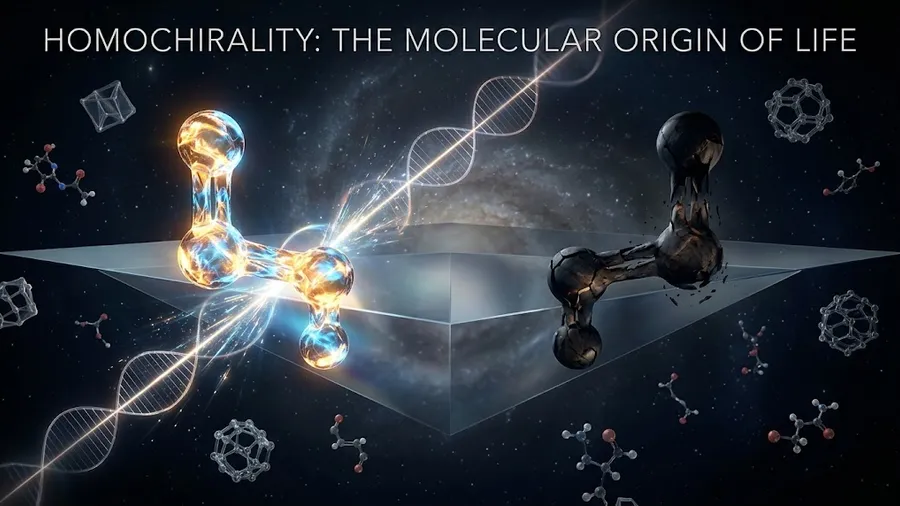
In 1848, a 25-year-old French chemist named Louis Pasteur was peering through a microscope at crystals of tartaric acid collected from wine casks. He noticed something peculiar: the crystals were not identical. Instead, they existed in two distinct asymmetric shapes that were exact mirror images of each other, like a pair of human hands.
Using tweezers, Pasteur painstakingly separated the left-handed crystals from the right-handed ones and dissolved them in separate beakers of water. When he passed polarized light through the solutions, the left-handed mixture rotated the light’s beam to the left, while the right-handed mixture rotated it by the exact same angle to the right.
Pasteur had uncovered the phenomenon of chirality—from the Greek word for hand.
A chiral molecule has a three-dimensional architecture that cannot be superimposed onto its mirror image. In non-living organic chemistry, any standard laboratory reaction synthesizing chiral molecules produces an exact 50/50 balance of both mirror twins, known as a racemic mixture.
Yet, when biochemists began mapping the molecular machinery of terrestrial biology, they uncovered an extraordinary anomaly.
Life is not racemic. Across every known organism on Earth—from ancient deep-sea archaea to blue whales and humans—all proteins are constructed exclusively from left-handed (L) amino acids, while all genetic backbones of RNA and DNA are built exclusively with right-handed (D) ribose sugars.
This absolute, unyielding preference for a single mirror-image geometry is called biological homochirality. Why life chose this strict geometric asymmetry—and how it maintained it without slipping back into racemic chaos—remains one of the deepest unsolved mysteries in science.
Why Homochirality Is Non-Negotiable
Could life not have simply used both forms interchangeably?
In basic chemistry, the two mirror twins (called enantiomers) share identical molecular weights, identical melting points, identical chemical bonds, and identical electrical charges. However, their spatial arrangements dictate how they interact with other chiral structures, much like how a right hand can only fit into a right-handed glove.
When simple molecules link together into long, functional biological polymers, homochirality becomes an absolute physical requirement:
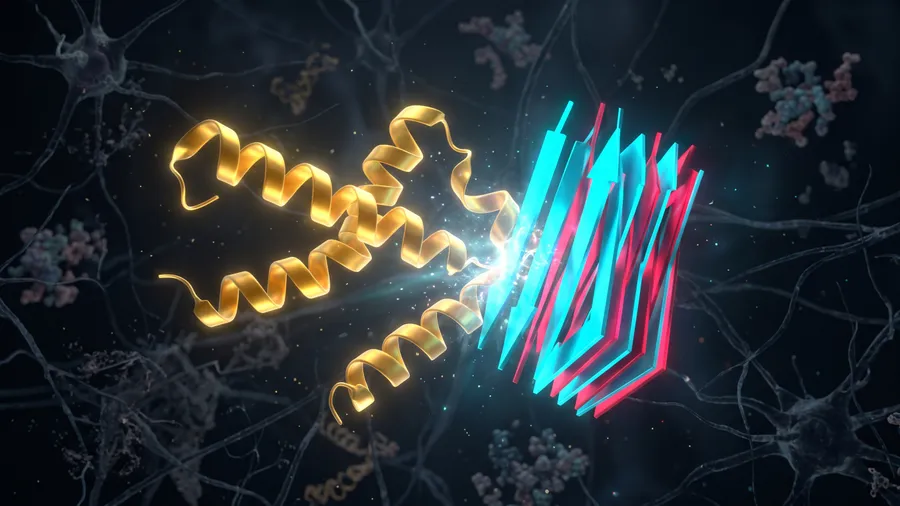
- Protein Folding: A functional protein is not a loose string of amino acids; it must fold with sub-angstrom precision into intricate three-dimensional shapes, alpha-helices, and beta-sheets to form enzymes and cellular motors. If even a single right-handed amino acid is inserted into a growing polypeptide chain, it disrupts the spatial hydrogen bonding network, causing the protein to misfold into useless biological debris.
- The Genetic Double Helix: The iconic double-helix geometry of DNA relies completely on the uniform right-handed twist of its sugar-phosphate backbone. If left-handed sugars are introduced, the nucleotide rungs cannot stack stably, and the double helix unravels.
For self-replicating molecular systems to emerge from prebiotic chaos, nature had to solve the homochirality problem first. A prebiotic soup containing equal amounts of left- and right-handed building blocks would inevitably suffer from enantiomeric cross-inhibition, where the wrong mirror twin caps a growing chain and halts replication entirely.
Hypothesis 1: Circularly Polarized Light from Deep Space
If early Earth started with a racemic 50/50 mixture of organic compounds, where did the initial push toward one hand come from? One leading school of thought looks beyond our planet to deep space.
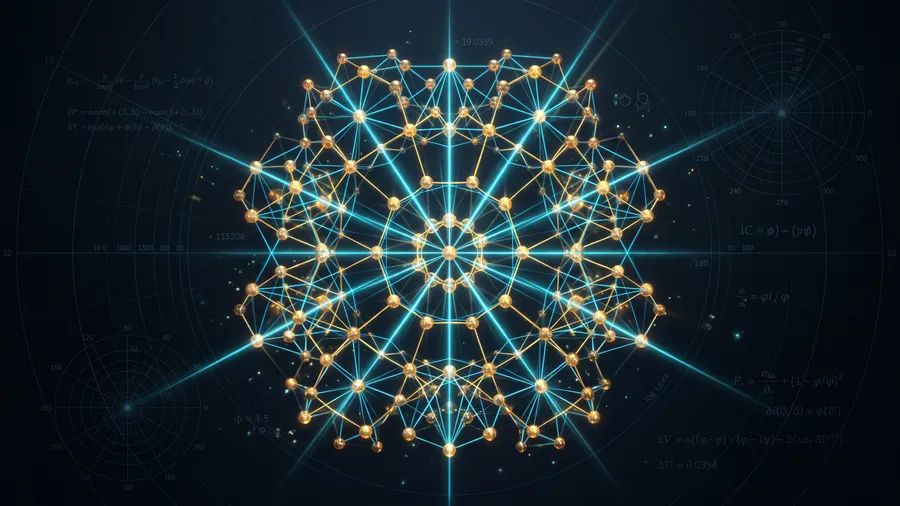
In massive star-forming nebulae, intense magnetic fields align interstellar dust grains. When radiation from newborn stars scatters off these aligned dust particles, it becomes circularly polarized light.
Circularly polarized ultraviolet radiation carries an intrinsic helical spin—either clockwise or counterclockwise. Laboratory experiments have shown that circularly polarized UV light can selectively destroy one enantiomer slightly faster than the other through asymmetric photochemical reactions, leaving behind an excess of its mirror twin.
This hypothesis received stunning physical confirmation from interstellar visitors:
- In 1969, the Murchison meteorite fell in Australia. Analysis of its pristine interior revealed dozens of amino acids that had formed abiotically in space before Earth existed.
- Crucially, several non-terrestrial amino acids (which Earth organisms do not use, eliminating biological contamination) exhibited a small, persistent excess of left-handed enantiomers—ranging between 2 and 18 percent.
- Subsequent meteoritic analyses, including samples from the Tagish Lake meteorite and samples returned by the Hayabusa2 spacecraft, confirmed similar enantiomeric imbalances.
It is entirely possible that the molecular chirality of terrestrial biology was not chosen on Earth at all, but was imprinted into cosmic dust clouds by stellar radiation billions of years ago and delivered to the young Earth via asteroid bombardment.
Hypothesis 2: The Weak Nuclear Force and Parity Violation
Another, more fundamental hypothesis proposes that chirality is hardwired into the subatomic fabric of the universe itself.
For decades, physicists believed that the laws of nature were completely symmetric under mirror reflection (known as Parity conservation). But in 1956, theoretical physicists Tsung-Dao Lee and Chen-Ning Yang suggested—and Chien-Shiung Wu experimentally proved—that the Weak Nuclear Force violates parity.
During radioactive beta decay, the electrons emitted by decaying nuclei are predominantly left-handed in their quantum spin.
When theoretical chemists calculate the interaction between the weak nuclear force and molecular electrons, they discover a minuscule energetic difference:
- Because of parity-violating weak neutral currents, left-handed amino acids are extraordinarily slightly more energetically stable than their right-handed counterparts.
- However, this energy difference is unimaginably faint—on the order of $10^{-17}$ electron volts per molecule.
While many chemists argue that thermal noise on the early Earth would drown out such a subtle advantage, some theorists propose that across millions of years, even an imperceptible energetic bias could act as a persistent statistical rudder.
The Amplification Engine: The Soai Reaction
Even if cosmic radiation or subatomic parity violation created an initial excess of left-handed molecules, that excess was likely tiny—perhaps only one extra left-handed molecule for every 100,000 right-handed ones.
How could a fractional, one-part-in-a-million bias ever transform into the 100 percent absolute purity demanded by biology?
In 1995, Japanese chemist Kenso Soai answered this challenge with a milestone discovery: asymmetric autocatalysis.
In the Soai reaction, a chemical compound acts as a catalyst for its own production. Crucially, the reaction exhibits two powerful properties:
- Mutual Autocatalysis: A left-handed molecule acts as a catalyst to produce more left-handed molecules, while right-handed molecules produce more right-handed molecules.
- Mutual Antagonism: When a left-handed molecule encounters a right-handed molecule, they bind together into an inactive dimer, removing both from the catalytic pool.
If you initiate the Soai reaction with an almost imperceptible enantiomeric bias—as tiny as 0.00005 percent—the autocatalytic feedback loop rapidly snowballs. Within hours, the reaction amplifies the slight initial majority while suppressing the minority, ending with a 100 percent homochiral product.
The Soai reaction proved that chemistry does not require a miracle to achieve absolute purity. Once an initial nudge occurs, non-linear chemical dynamics can naturally drive a system to complete homochiral unity.
The Ultimate Biosignature for Alien Life
The enigma of homochirality has profound practical consequences for modern space exploration and the search for extraterrestrial life.
When robotic rovers explore the soils of Mars, or future probes sample the plumes of Enceladus and Europa, they look for complex organic molecules. But finding amino acids or sugars alone does not prove the existence of alien life, because non-living chemistry can readily produce them.
The definitive, undeniable signature of biology is optical purity:
- If an alien ocean yields a flat 50/50 racemic mixture of amino acids, it is the result of non-living, abiotic geochemistry.
- If an alien sample contains complex organic polymers where 99.9 percent of the monomers belong to a single chiral hand, it is direct proof of an active metabolic or genetic system.
Life cannot function without a chosen hand.
A Universe in the Looking Glass
The Chirality Enigma reminds us of the delicate historical contingency embedded in our own bodies.
There is nothing chemically superior about a left-handed amino acid compared to a right-handed one; a hypothetical “mirror universe” organism built from right-handed amino acids and left-handed sugars would metabolize, grow, and reproduce with identical physical efficiency.
Yet, because of a slight cosmic whisper—perhaps a flash of polarized ultraviolet light in an ancient stellar nursery or an autocatalytic tipping point in a primordial tide pool—our lineage locked into a left-handed world. Every breath of oxygen, every strand of our DNA, and every enzyme in our blood is an enduring echo of an asymmetric choice made four billion years ago.